
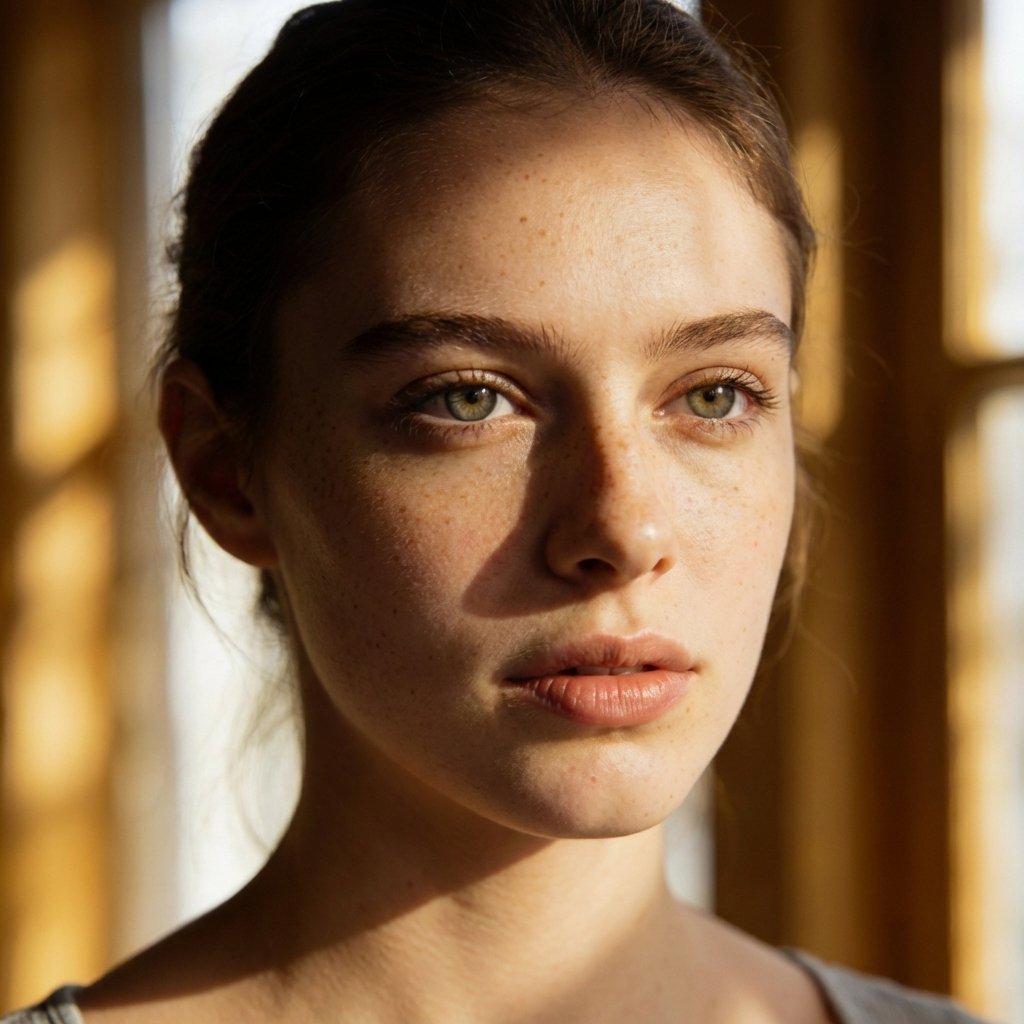
When creating an AI human model, the key problem is identity consistency.
Most AI tools (including Leonardo) primarily learn the face, but not the body.
As a result:
- portraits look stable
- half-body images become inconsistent
- full-body images generate a different person
Higgsfield is designed differently.
Key advantages of Higgsfield
Higgsfield trains a model on:
- face identity
- body proportions
- pose patterns
- visual consistency across distances
This makes Higgsfield suitable for creating a real AI character, not just a face.
Goal of This Guide
After completing this guide, you will have:
- a trained AI model in Higgsfield
- a stable identity (face + body)
- a ready dataset for future generation
- a working pipeline for AI model creation
PART 1 — DATASET PREPARATION (MOST IMPORTANT STEP)
1.1 Why Dataset Quality Matters
Higgsfield does not “fix” bad data.
It amplifies it.
If your dataset is:
- inconsistent → model will be inconsistent
- unrealistic → model will look artificial
- unbalanced → identity will break
1.2 Required Dataset Structure
You must generate the dataset before training.
Minimum working dataset
| Image type | Quantity |
|---|---|
| Portrait (close-up face) | 25 |
| Half-body | 20 |
| Full-body | 20 |
| TOTAL | 65 |
⚠️ Critical rule:
If you have less than 15 full-body images, the model will fail.
1.3 Core Prompt Formula for Dataset Images
Use one unified style for all images.
Base prompt template
ultra realistic photo of a young woman, same person, natural proportions, neutral expression, soft natural light, simple environment, realistic photography, high detail
Universal negative prompt (use always)
cartoon, anime, doll, plastic skin, unrealistic body, distorted face, extra fingers, extra limbs, bad anatomy, exaggerated proportions, cinematic lighting, glamour, fashion editorial
PART 2 — PROMPTS FOR DATASET GENERATION
Below are NOT decorative prompts.
These are engineered prompts for training data.
2.1 Portrait Prompts (25 images)
Goal: teach Higgsfield stable facial identity.
P1–P5 (front view)
ultra realistic close-up portrait of a young woman, front view, neutral expression, soft natural daylight, simple light background, realistic skin texture
ultra realistic close-up portrait of a young woman, front view, slight natural smile, soft daylight, neutral background
ultra realistic close-up portrait of a young woman, front view, serious expression, soft natural light, minimal background
ultra realistic close-up portrait of a young woman, front view, calm expression, neutral tones
ultra realistic close-up portrait of a young woman, front view, relaxed expression, simple background
P6–P12 (angles)
ultra realistic portrait of a young woman, 3/4 angle view, soft natural light, neutral background
ultra realistic portrait of a young woman, side profile, soft daylight, minimal background
ultra realistic portrait of a young woman, head slightly tilted, natural light, simple background
ultra realistic portrait of a young woman, looking slightly left, soft daylight, neutral tones
ultra realistic portrait of a young woman, looking slightly right, soft daylight, minimal environment
ultra realistic portrait of a young woman, direct eye contact, natural light, simple background
ultra realistic portrait of a young woman, calm expression, realistic skin texture
P13–P25 (controlled variations)
Repeat the same structure with micro-variations:
- angle: front / 3⁄4 / side
- expression: neutral / slight smile / calm
- light: soft daylight / window light
Example:
ultra realistic close-up portrait of a young woman, 3/4 angle, soft window light, neutral expression, simple background
Generate 13 variations.
2.2 Half-Body Prompts (20 images)
Goal: connect face with upper-body proportions.
H1–H5 (standing)
ultra realistic half body photo of a young woman, standing, natural posture, simple modern interior, soft natural light
ultra realistic half body photo of a young woman, relaxed posture, neutral interior, soft daylight
ultra realistic half body photo of a young woman, arms relaxed, minimal interior
ultra realistic half body photo of a young woman, casual posture, simple background
ultra realistic half body photo of a young woman, natural pose, neutral colors
H6–H10 (sitting)
ultra realistic half body photo of a young woman sitting, natural posture, simple interior
ultra realistic half body photo of a young woman sitting on a chair, relaxed pose
ultra realistic half body photo of a young woman sitting indoors, natural light
ultra realistic half body photo of a young woman sitting, calm expression
ultra realistic half body photo of a young woman sitting, minimal environment
H11–H20 (variations)
Change only posture and slight body turn.
Example:
ultra realistic half body photo of a young woman, standing slightly turned to the side, natural posture, simple interior
Generate 10 variations.
2.3 Full-Body Prompts (20 images)
Goal: teach Higgsfield full identity (face + body).
⚠️ Keep scenes simple.
F1–F5 (standing)
ultra realistic full body photo of a young woman standing, natural proportions, neutral pose, simple modern interior, soft natural light
ultra realistic full body photo of a young woman standing straight, relaxed posture, minimal interior
ultra realistic full body photo of a young woman standing, arms relaxed, simple background
ultra realistic full body photo of a young woman standing, calm pose
ultra realistic full body photo of a young woman standing, neutral environment
F6–F10 (walking)
ultra realistic full body photo of a young woman walking slowly, natural movement, simple interior
ultra realistic full body photo of a young woman walking, relaxed posture
ultra realistic full body photo of a young woman walking indoors, natural proportions
ultra realistic full body photo of a young woman walking, simple background
ultra realistic full body photo of a young woman walking, minimal environment
F11–F15 (sitting)
ultra realistic full body photo of a young woman sitting on a chair, natural posture
ultra realistic full body photo of a young woman sitting, relaxed pose
ultra realistic full body photo of a young woman sitting indoors, natural proportions
ultra realistic full body photo of a young woman sitting, minimal environment
ultra realistic full body photo of a young woman sitting, realistic lighting
F16–F20 (variations)
ultra realistic full body photo of a young woman, slight body turn, natural posture, simple interior
Generate 5 variations.
PART 3 — PREPARING DATASET FOR HIGGSFIELD
3.1 Image Requirements
Each image must:
- show the same person
- have realistic proportions
- avoid extreme stylization
- avoid heavy filters
Delete images with:
- distorted face
- unnatural body
- extra limbs
- cinematic or glamour lighting
3.2 Recommended Image Size
Resize all images to:
- 512×512 or
- 768×768
3.3 Folder Structure
HIGGSFIELD_DATASET
│
├── portraits
├── half_body
├── full_body
PART 4 — TRAINING MODEL IN HIGGSFIELD
4.1 Access Platform
Open:
4.2 Create Model
Click:
- Create Model
or - New Model
Choose:
- Human / Person Model (if available)
4.3 Upload Dataset
Click:
- Upload Images
or - Upload Dataset
Upload all 60–70 images.
4.4 Dataset Validation
If Higgsfield shows warnings:
- remove low-quality images
- add more full-body images if required
- reduce extreme variations
4.5 Choose Training Plan
Typical options:
| Plan | Quality | Recommendation |
|---|---|---|
| Basic | Low | Not recommended |
| Pro | High | Best choice |
| Advanced | Very high | Optional |
Recommendation:
Choose Pro.
Reason:
- Basic → unstable identity
- Pro → stable AI model
4.6 Start Training
Click:
- Train Model
Training time:
- 20–60 minutes
PART 5 — RESULT
After training, you will have:
- a stable AI model
- consistent face identity
- consistent body proportions
- ready-to-use AI character
You can now generate new images using your model.
PART 6 — Typical Problems and Solutions
Problem 1 — Face changes
Cause: too few portraits
Solution: add 10–15 close-up portraits
Problem 2 — Body changes
Cause: too few full-body images
Solution: add 10–15 full-body images
Problem 3 — Model looks artificial
Cause: dataset too stylized
Solution: remove cinematic images
Problem 4 — Identity unstable
Cause: dataset too diverse
Solution: simplify poses and lighting
Final Conclusion
Higgsfield is not a magic tool.
It is a system that requires a structured dataset.
If you:
- generate images using the prompts above
- balance portrait, half-body, and full-body images
- avoid stylization and extremes
you will obtain a stable AI model suitable for further use.
This is the shortest and most reliable path to creating an AI model in Higgsfield. Read a more detailed article here – https://aiworkflowtips.com/how-to-create-a-realistic-ai-model-in-higgsfield/